
AI Agents & MCP Integration

Home AI Agents & MCP Integration
AI Agents & MCP Integration

AI Agents & MCP Integration

Agents that reach your real systems — with a permission model and an audit trail from day one.

The pilot almost always works. What stops it is the moment an agent needs to touch a system that matters, and nobody can say in writing what it is allowed to reach, who decided that, or what you would produce if someone asked you to justify a decision it made. That is an architecture problem rather than an AI one, and it is the problem we solve. We build the agents and the Model Context Protocol layer that connects them to your existing stack, and we build the access, permission and audit structure around them at the same time — not as a retrofit after somebody asks.

What we actually build

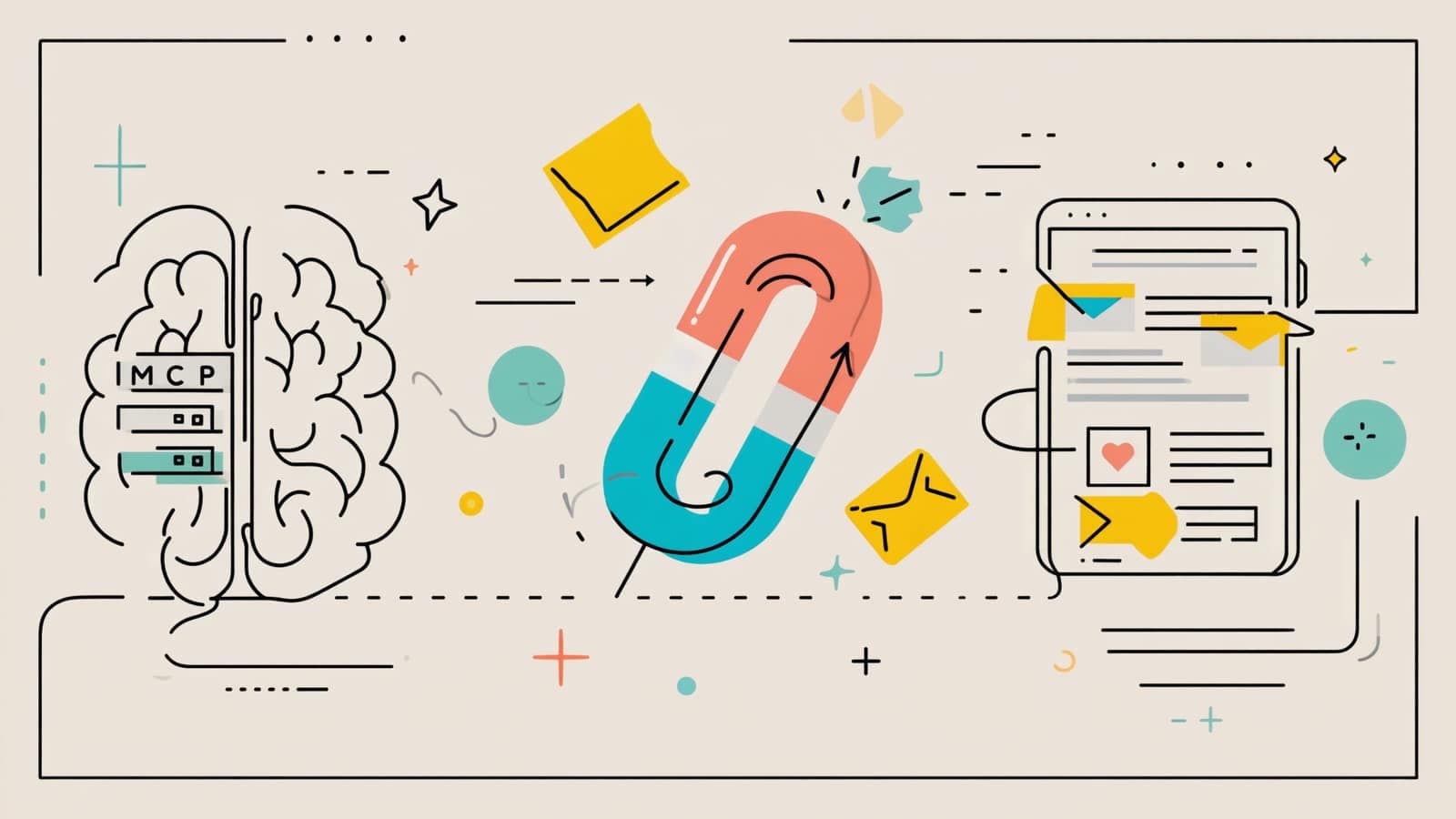
MCP servers that expose your internal tools, databases and APIs to Claude, ChatGPT or any client that speaks the protocol. Task-specific agents for research, triage, reporting, follow-up and routine decision support. The permission and access model that governs what each agent can reach, expressed as something enforceable rather than a document. Decision records written at the moment an agent acts, so there is something to produce later. And the unglamorous integration work underneath it — legacy systems made controllable, connectors for SaaS products that never had one, fallback behaviour for when a system is down.

How we work

We start with a short discovery, usually a week or two, mapping which systems an agent would need to reach and sorting them by how much damage a wrong call could do. That produces the access model, and the access model is what makes the rest of the build straightforward. Then we ship something real in weeks rather than quarters, hourly and flexible, delivering against outcomes you can see. We co-design with your team throughout, because an integration only your vendor understands is a liability regardless of how well it works.

Who this is for

Teams with a working agent pilot and no route to production. Organisations where a security, risk or compliance function is going to ask what the agent can reach and expect a written answer. Companies with a niche CRM, an on-premise database or a legacy platform that nobody has built a connector for. And anyone who has been told their AI project needs to be auditable and is not yet sure what that means in practice.

What's included

Agent Architecture

Tiered system access, enforceable permission models, and orchestration designed for review from the start rather than added afterwards.

MCP Server Development

Model Context Protocol servers exposing your internal tools, databases and APIs to any AI client that speaks the protocol.

Audit Trails & Evidence

Decision records written as the agent acts — inputs, tools called, context retrieved, authority — so you can produce them years later.

Core System Integration

Connections into CRM, billing, records and line-of-business platforms, including error handling and fallback behaviour.

Legacy & CLI Readiness

Older systems made controllable by agents through scripted interfaces and structured command layers.

Architecture Review & AI Readiness

An honest assessment of what your current landscape will carry today, and the shortest defensible route to production.

Engagement shape

Hourly consulting, typically 20-40 hours per month with a 3-month initial runway. Weeks 1-2 discovery and access modelling. Weeks 3-4 first integration delivered and validated. Ongoing iteration monthly. You own everything we build, and we would rather hand it to your team than keep you dependent on us.

Frequently Asked Questions

Model Context Protocol is an open standard for giving AI clients structured access to your tools and data. An MCP server is a small service you run that exposes a specific capability — 'search our knowledge base', 'look up a customer record', 'create a ticket' — to any AI that speaks the protocol. You need one when you want an assistant to work with your real business data rather than general chat, and you want one consistent place to answer the question of which agents can reach what.

No, and we will tell you when it is not. If you have one workflow hitting one system with no plan for a second, build the integration and skip the abstraction. If the task runs on a schedule rather than in conversation, that is a job, not an agent. Roughly a third of the time we look at a client system and recommend something simpler than what they came to us for.

It changes the order of work rather than the work itself. In a regulated environment the access model and the audit trail have to exist before the first production deployment, because they cannot be reconstructed convincingly afterwards. Our background is enterprise and security architecture — incident response infrastructure, compliance programmes — so this is the sequence we would follow anyway. It just becomes non-negotiable.

Zapier is genuinely good for simple linear automations, and we will happily wire up the ones that make sense. We build what it cannot: custom agent logic, stateful workflows, integrations that need real code, and the access and evidence layer underneath. The difference shows up when someone asks which systems your automation can reach and you need an answer that holds.

All of it — the code, the infrastructure definitions, the access model, the documentation. We build in your accounts wherever possible and hand over with a walkthrough. If your team cannot maintain what we built, we have not finished.
Explore our other services

Got an Agent Stuck Between Pilot and Production?

That is the conversation we have most often, and it is usually an architecture problem rather than an AI one. Book a 20-minute call — no prep, no pressure — and we will tell you honestly whether we are the right team for it.